Supercharger vs Turbo: Key Differences and Performance Comparison
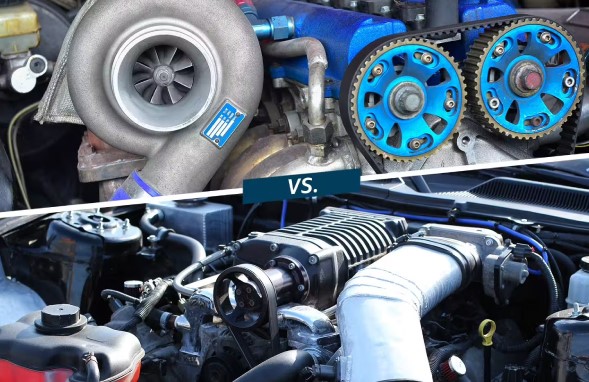
Source:https://www.detailingdevils.com
Picture this: You are standing at a red light, the engine of your project car idling with a deep, rhythmic rumble. The lane next to you opens up, and a sleek sports coupe pulls up. You both know what happens when the light turns green. But as you plant your foot on the accelerator, your car reacts instantly, pinning you back into your seat. Meanwhile, the car next to you experiences a brief heartbeat of hesitation before exploding forward like a rocket ship.
What you just witnessed wasn’t a difference in driver skill; it was the classic, decades-old showdown of forced induction: Supercharger vs Turbo.
Over my ten years of turning wrenches, tuning ECUs, and burning midnight oil in the garage, I’ve had the privilege of tearing down and building both systems. I have seen the pure joy of instant torque and the intoxicating rush of top-end boost. If you are a car enthusiast trying to decide which path to take for your own ride, or simply trying to understand what happens under the hood, you’ve come to the right place. Let’s demystify these mechanical lung systems.
The Basics: Why Do We Need Forced Induction Anyway?
Before we dive into the specific mechanics of the supercharger vs turbo debate, we need to understand their shared goal. Think of an internal combustion engine as a giant air pump. It mixes air with fuel, ignites it, and creates power.
A standard, naturally aspirated engine draws in air at normal atmospheric pressure. But if you want more power, you need more air.
The Golden Rule of Horsepower: More Air + More Fuel = Bigger Explosion = More Speed.
Both superchargers and turbochargers are air compressors designed to force extra oxygen into your engine—a process known as forced induction. However, how they drive those compressors is where their personalities completely diverge.
What is a Supercharger? Instant Power on Demand
Let’s start with the mechanical purist’s choice: the supercharger. In my years on the shop floor, nothing quite matches the mechanical symphony of a supercharger’s whine.
How It Works: Connected to the Crank
A supercharger is bolted directly to the engine and is driven mechanically by a belt connected to the engine’s crankshaft. The moment your engine spins, the supercharger spins.
To use an analogy, a supercharger is like an Olympic cyclist on a stationary bike connected directly to a fan. The faster the cyclist pedals (the higher your engine RPM), the faster the fan blows air.
The Pros: Zero Lag and Predictable Power
Because it is physically tied to the engine’s crankshaft, there is absolutely zero delay. You press the gas pedal, and the boost is instantaneous. It creates a linear power curve, meaning your car feels like it simply has a much larger, naturally aspirated engine.
The Cons: The Parasitic Drain
There is no such thing as a free lunch in automotive engineering. Because the engine has to physically turn the supercharger, it requires power to make power. This is known as parasitic loss. It’s like running your home air conditioner while trying to sprint—it saps a bit of your baseline energy.
What is a Turbocharger? Recycling Waste for Massive Gains
If a supercharger is brute mechanical force, a turbocharger is an exercise in brilliant efficiency.
How It Works: Harnessing the Exhaust
Instead of relying on a belt, a turbocharger utilizes the kinetic energy of your engine’s spent exhaust gases. It consists of two main wheels connected by a shaft: a turbine wheel and a compressor wheel.
Exhaust gas exits the engine and spins the turbine wheel. This, in turn, spins the compressor wheel, which packs fresh air tightly into the cylinders.
Think of a turbocharger like a pinwheel placed in front of a hair dryer. The harder the hair dryer blows (the more exhaust your engine produces), the faster the pinwheel spins, generating massive boost.
The Pros: Incredible Efficiency and Peak Power
Turbos are incredibly efficient because they use “free” energy that would otherwise shoot out of your tailpipe. They don’t place a mechanical drag on the engine. Dollar for dollar, a turbocharger setup will almost always yield higher peak horsepower numbers than a supercharger.
The Cons: The Dreaded Turbo Lag
Because a turbo relies on exhaust gas volume to spool up, there is a distinct delay between the moment you step on the gas and the moment the turbo reaches its optimal spinning speed. This delay is called turbo lag. In older setups, it felt like waiting for a fuse to burn before a sudden, violent explosion of power.
Head-to-Head: Supercharger vs Turbo Performance Comparison
To help you visualize how these two titans stack up against each other in real-world scenarios, I’ve broken down their key attributes into a quick-reference guide.
| Feature | Supercharger | Turbocharger |
| Power Delivery | Instantaneous, smooth, and linear | Delayed onset (lag) followed by a massive surge |
| Power Source | Engine Crankshaft (via belt) | Exhaust Gas Energy |
| Efficiency | Lower (Parasitic engine drain) | Higher (Uses recycled waste energy) |
| Installation Complexity | Relatively straightforward | Complex (Requires custom exhaust plumbing) |
| Heat Management | Runs cooler overall | Generates extreme heat; requires an intercooler |
| Best Suited For | Drag racing, towing, muscle cars | Track racing, daily drivers, small engines |
Insider Insight: Tuning and Maintenance Realities
From someone who has spent hours tracking down boost leaks and replacing burnt-out bearings, here is the raw truth you won’t always find in a glossy sales brochure.
Pro Tip: Mind the Heat
If you decide to go the turbocharger route, heat management is your absolute number one priority. Turbos glow red hot under heavy load because they are directly bolted to the exhaust manifold.
Always allow your turbocharged car to idle for 30 to 60 seconds before turning it off after a spirited drive. This keeps oil flowing through the glowing hot turbo bearings, preventing the oil from “coking” (turning into destructive sludge) inside the turbo lines.
Hidden Warning: The Belt Slippage Trap
With superchargers, especially centrifugal or roots-style blowers running high boost, belt slip is your silent enemy. As the rubber belt wears down or stretches under load, it can slip against the pulley. You might notice a sudden, mysterious drop in boost at high RPMs. Upgrading to a heavy-duty tensioner and a high-grip, ribbed belt is a must for long-term reliability.
Which One is Right For You?
Choosing between a supercharger vs turbo ultimately comes down to what you want your car to feel like when you drive it.
-
Choose a Supercharger if: You love instant throttle response, value low-end torque for stop-light acceleration or heavy towing, prefer an easier installation process, and want that iconic, mechanical whine.
-
Choose a Turbocharger if: You want maximum peak horsepower, love the sensation of a massive wave of boost hitting you mid-range, care about fuel efficiency when you aren’t driving aggressively, and enjoy the sound of a blow-off valve spitting excess air.
Modern engineering has minimized the downsides of both. We now have twin-scroll turbos that practically eliminate lag, and highly efficient twin-screw superchargers that minimize parasitic loss. However, their core identities remain unchanged.
What’s Your Power Preference?
Every car enthusiast remembers the first time they felt forced induction kick in. It changes your perception of speed forever. Whether you favor the instant, muscular grunt of a supercharger or the high-tech, rocket-like surge of a turbocharger, there is no wrong answer—only the thrill of the drive.
Now, I want to hear from you! Are you Team Supercharger or Team Turbo? Have you had a chance to drive both, and which experience left a bigger smile on your face? Drop your thoughts, questions, or your own garage builds in the comments below!