Signs of a Failing Head Gasket: Symptoms and Repairs
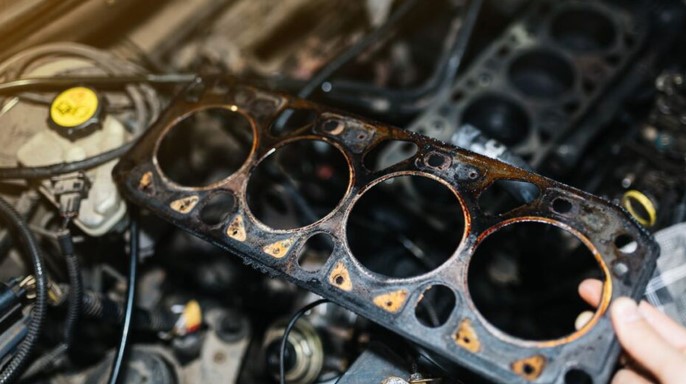
Source:https://napacarcare.com
It’s 5:30 PM on a scorching Friday afternoon. You are halfway through a grueling commute home, listening to your favorite podcast, when you notice a strange, sweet smell wafting through the AC vents. You glance down at the dashboard, and your heart drops. The temperature needle isn’t just creeping up; it is firmly pinned in the red zone, and a ominous wisp of white smoke is beginning to curl out from under the hood.
In my ten-plus years as a mechanic, I have seen this exact look of sheer panic on hundreds of drivers’ faces. It is the universal realization that you might be dealing with the most dreaded diagnosis in the automotive world: a blown head gasket.
The head gasket is a small, relatively inexpensive component, but when it fails, it can cause catastrophic engine damage if ignored. Let’s pull back the hood, look at my years of garage experience, and break down the definitive signs of a failing head gasket, how to spot them early, and what it actually takes to fix it.
What is a Head Gasket, Anyway?
Before we look at the symptoms, we need to understand what this component actually does. Your car’s engine is essentially divided into two main parts: the engine block (the bottom half where the pistons move) and the cylinder head (the top half where the valves live).
The head gasket is the critical seal sandwiched right between them. Think of it as the ultimate peacekeeper in a volatile neighborhood.
Inside the engine, you have three highly destructive elements running inches away from each other: combustion gases (burning at thousands of degrees), engine oil (under high pressure), and engine coolant (keeping everything from melting). The head gasket’s sole job is to act like a heavy-duty security wall, ensuring these three elements never cross paths or leak out of the engine.
5 Crucial Signs of a Failing Head Gasket
When that “security wall” begins to crumble, the symptoms can range from subtle quirks to dramatic mechanical failures. Here are the classic signs of a failing head gasket that I look for the second a car gets towed into my bay.
1. The “Milky Coffee” Oil Cap
This is one of the quickest visual checks you can do yourself. Pull out your engine oil dipstick or unscrew the oil filler cap. If the oil looks like a frothy, creamy coffee or a thick milkshake, you have a problem.
This happens because the failed gasket has allowed engine coolant to breach the oil passages. When water and oil mix under the high-speed churning of your engine’s crankshaft, it emulsifies into that distinct milky sludge.
2. Billowing White Smoke from the Exhaust
We aren’t talking about the light condensation vapor you see on a cold winter morning. A blown head gasket often allows coolant to leak directly into the combustion chambers.
As the spark plugs ignite the fuel, they also boil the intruding coolant. The result? A thick, persistent cloud of sweet-smelling white smoke billowing out of your tailpipe, even after the engine has warmed up completely.
3. Unexplained Loss of Coolant and Overheating
If you find yourself constantly topping off your coolant reservoir, but you can’t find a puddle on your garage floor, your engine is likely “drinking” it.
As the coolant burns away or gets pushed out, the cooling system loses pressure. This leads to rapid, severe engine overheating, which can warp your aluminum cylinder head if you keep driving.
4. Bubbles in the Radiator or Expansion Tank
This is the reverse of coolant leaking into the cylinders. Sometimes, the raw force of engine compression pushes high-pressure exhaust gases into the cooling system.
If you safely remove your radiator cap (only when the engine is completely cold!) and start the car, you might see a steady stream of bubbles rising up, looking like a boiling pot of water. This is combustion gas escaping through the cooling lines.
5. Engine Misfires and Rough Idling
When a head gasket degrades between two adjacent cylinders, the engine loses its tight seal. This drop in compression means the fuel-air mixture won’t ignite properly. You will feel this as a rough, shaking idle, a sluggish acceleration, or a flashing “Check Engine Light” indicating a cylinder misfire code (such as P0301 or P0302).
Expert Advice: The 5-Minute Diagnosis Trick
💡 Pro Tip: The Chemical Block Test
If you suspect your head gasket is failing but the symptoms are subtle, don’t guess—test. You can buy a cheap “Block Test Kit” or combustion leak detector at any auto parts store. It features a plastic tube filled with a blue chemical fluid that sits on top of your open radiator neck.
If exhaust gases are leaking into your coolant, the chemical liquid will react to the carbon dioxide and turn from bright blue to a vivid yellow or green within minutes. It is the closest thing to a definitive pregnancy test for your engine.
Repair Options: What Happens Next?
If you have confirmed the signs of a failing head gasket, you are likely wondering about the repair process. I won’t sugarcoat it: a head gasket replacement is a labor-intensive job.
While the actual replacement gasket might only cost $50 to $100, the labor required to get to it involves stripping down the entire top half of your engine. Here is what a proper repair process looks like:
-
Teardown: Disconnecting the intake manifold, exhaust manifold, timing belt/chain, and removing the cylinder head.
-
Inspection and Machining: A veteran mechanic will never just slap a new gasket on. The cylinder head must be sent to a machine shop to be checked for cracks using pressure testing, and milled flat to correct any warping caused by overheating.
-
Reassembly: Installing the new multi-layer steel (MLS) head gasket and using brand-new cylinder head bolts, which must be tightened to exact manufacturer torque specs.
A Warning on “Head Gasket Sealants”
You will see bottles of chemical “head gasket repair liquid” at the store promising a cheap miracle fix. Consider these an absolute last resort.
These chemicals work by hardening when exposed to high heat, which can temporarily plug a tiny leak. However, they can also clog your radiator cores, gum up your heater core, and ruin your water pump. If you plan on keeping the car, save your money and fix it mechanically.
Final Thoughts: Catch It Early to Save Your Engine
A failing head gasket is a progressive disease. What starts as a tiny, invisible breach will inevitably grow into a catastrophic failure that can ruin your entire engine block. By keeping an eye out for milky oil, sweet-smelling smoke, and fluctuating temperature gauges, you can catch the problem before it leaves you stranded.
Have you ever had to deal with a blown head gasket on your own vehicle, or are you currently trying to diagnose a mysterious coolant loss? Drop a comment below with your vehicle’s symptoms, and let’s figure it out together!