Top Commercial Van Models: Best Picks for Business Use
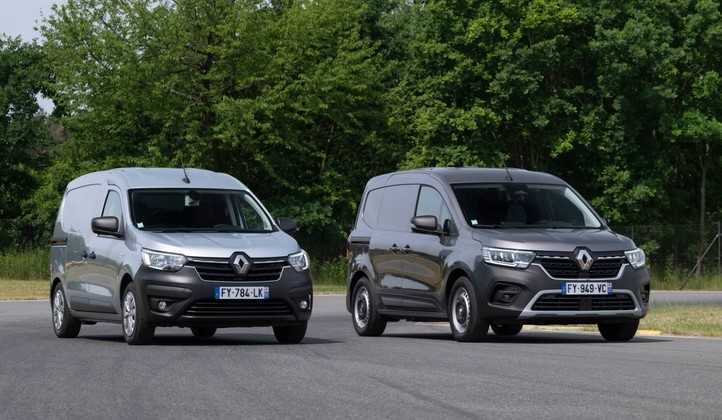
Source:https://userimg-assets-eu.customeriomail.com/images
Imagine watching your delivery driver pull away from the warehouse, fully loaded for a massive route, only to get a text twenty minutes later: “The engine light is on, the rear suspension is sagging, and I’m stuck on the side of the highway.” For a business owner, a broken-down van isn’t just an automotive headache—it’s bleeding cash, missed deadlines, and damaged customer trust.
Over the last ten years running a commercial fleet workshop and consulting for logistics small-businesses, I’ve torn down, serviced, and optimized thousands of work vans. I’ve seen vehicles that crumble under a heavy payload within two years, and others that cross the 300,000-mile mark still purring like kittens. Choosing from the top commercial van models on the market isn’t about buying the prettiest vehicle; it’s about matching a mechanical tool to your daily operational reality.
In this deep-dive guide, we will cut through the generic marketing brochures and look at the absolute best commercial vans for business use based on real-world reliability, cost of ownership, and mechanical durability.
The Cargo Philosophy: Why Your Work Van is a Tool, Not a Car
Before looking at specific models, let’s establish a foundational truth. Choosing a commercial van is completely different from buying a personal SUV. You need to look at it through the lens of a Total Cost of Ownership (TCO).
Think of a commercial van like a mobile office building on wheels. If the foundation (chassis) isn’t tough enough, or if the layout (cargo volume) forces your employees to work uncomfortably, your entire operation slows down.
When analyzing these vehicles, we focus on three vital technical metrics:
-
Payload Capacity: The maximum weight the van can safely carry inside its cabin (including driver, fuel, and cargo).
-
Gross Vehicle Weight Rating (GVWR): The maximum total weight of the vehicle completely loaded.
-
Upfitter Compatibility: How easy it is to bolt in custom shelving, racks, or refrigeration systems into the cargo bay.
The Heavyweights: Evaluating the Top Commercial Van Models
Let’s dive into the undisputed kings of the modern logistics world—the full-size workhorses that power everything from plumbing businesses to Amazon delivery routes.
1. Ford Transit: The Undisputed King of Versatility
There is a very clear reason why the Ford Transit dominates fleet sales year after year. In my garage, the Transit is universally loved by mechanics because parts are widely available, cheap, and it is built with an incredibly modular design.
-
Engine Options: It features a highly reliable 3.5L V6 or a powerful 3.5L EcoBoost Twin-Turbo V6.
-
The Standout Feature: Unrivaled Configuration. You can order the Transit in three different roof heights and three body lengths. The high-roof version lets an adult up to 6’5″ stand completely upright inside the back without bending over.
-
The Mechanic’s Verdict: The Transit drives more like a nimble large SUV than a heavy-duty box truck. Its uni-body construction saves weight, allowing for excellent fuel economy and high payload ratings.
2. Mercedes-Benz Sprinter: The Premium Overbuilt Workhorse
Whenever a client comes to me running an upscale mobile detailing business, high-end catering, or long-distance logistics, I steer them toward the Sprinter. It is built like a literal tank.
-
Engine Options: High-torque 4-cylinder turbo-diesel engines paired with highly efficient 9-speed transmissions.
-
The Standout Feature: All-Wheel Drive (AWD) Mastery. If your business operates in heavy winter snow or muddy construction sites, the Sprinter’s AWD system is far superior to its competitors.
-
The Mechanic’s Verdict: The build quality is top-tier. However, be warned: preventative maintenance is non-negotiable. While a Transit might forgive a slightly delayed oil change, a Sprinter diesel engine demands exact service intervals and specific European fluids, or it will throw costly exhaust-system codes.
3. RAM ProMaster: The Urban Space Optimizer
The RAM ProMaster takes a completely different engineering approach from Ford and Mercedes by utilizing a Front-Wheel Drive (FWD) layout.
-
Engine Options: The legendary, naturally aspirated 3.6L Pentastar V6.
-
The Standout Feature: Lowest Load Floor Height. Because there is no driveshaft running under the floor to power the rear wheels, the cargo floor sits significantly lower to the ground. This makes stepping in and out of the van 100 times a day incredibly easy on your delivery drivers’ knees.
-
The Mechanic’s Verdict: The FWD system gives it excellent traction in light snow or rain because the weight of the heavy engine sits directly over the drive wheels. It also features a boxier wall design, which upfitters absolutely love because it makes installing standard shelving incredibly straightforward.
+------------------+-----------------------+-------------------------+-------------------------+
|    Van Model     |  Key Structural Perk  | Best Business Niche     | Mechanic's Priority     |
+------------------+-----------------------+-------------------------+-------------------------+
| Ford Transit     | Highly Modular Body   | General Contractors     | Cheap Parts/Easy Fixes  |
| MB Sprinter      | Heavy-Duty Chassis    | Long-Haul / Heavy Cargo | Strict Maintenance Reg. |
| RAM ProMaster    | Low FWD Cargo Floor   | Urban Last-Mile Delivery| Front Suspension Wear   |
+------------------+-----------------------+-------------------------+-------------------------+
Expert Advice: The Hidden Pitfall of Buying Used Commercial Fleet Vans
⚠️ The Idle-Hour Trap
If you are shopping the used market for top commercial van models to save on upfront business capital, never look just at the odometer mileage.
Always scroll through the digital dashboard menu to check the Engine Idle Hours. Many delivery and service vans spend hours sitting at curbs with the engine running to keep the AC or tools powered. One hour of idling causes mechanical engine wear equivalent to roughly 30 miles of driving. A van with only 60,000 miles but 4,000 idle hours actually has an engine that has worked like a 180,000-mile vehicle!
Pro Tip: Electrification is Moving Fast
If your business operates strictly within a tight urban radius doing local deliveries (under 100-120 miles per day), you absolutely must look into options like the Ford E-Transit.
Going electric for commercial use removes dozens of mechanical failure points. There are no spark plugs, no engine oil changes, no transmission flushes, and no catalytic converters for thieves to steal overnight. The brake pads also last three times longer thanks to regenerative braking systems. It is a massive game-changer for reducing long-term fleet operational costs.
Elevate Your Business Fleet Today
At the end of the day, your commercial vehicle is an extension of your business’s balance sheet. If you want maximum ease of repair and infinite customization options, buy the Ford Transit. If you require heavy-duty hauling capacity, maximum vehicle lifespan, and handle rough terrain, invest in the Mercedes-Benz Sprinter. If you run high-volume, rapid city deliveries where floor height and cargo box symmetry matter most, the RAM ProMaster is your ideal match.
Now it’s your turn to chime in! What kind of business do you run, and what challenges are you facing with your current vehicle setup? Drop a comment below, and let’s discuss the ultimate upfitting configuration for your trade!