Fastest Muscle Cars Today: Modern Powerhouses on the Road
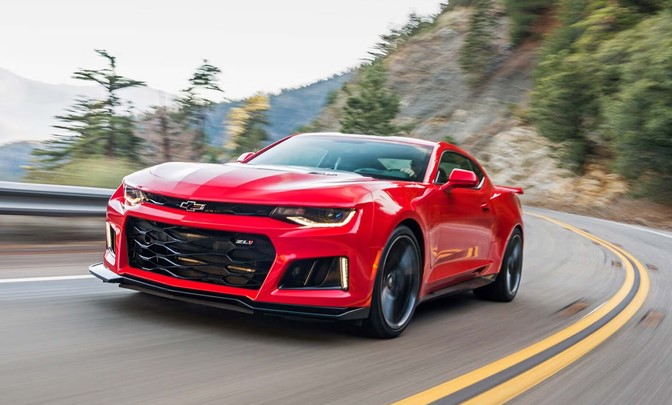
Source:https://hips.hearstapps.com
If you still think a muscle car is just a primitive, heavy piece of iron designed to burn rubber in a straight line before overheating in a McDonald’s parking lot, it is time for a massive wake-up call. The modern muscle landscape has undergone a tectonic shift. Right now, production muscle cars are rolling off factory lines with enough engineering sophistication to make European supercars sweat and enough raw power to warp tarmac.
Over my ten-plus years as an automotive technician and performance writer, I have watched this evolution unfold from the front lines. I’ve gone from greasy garage floors rebuilding old-school, naturally aspirated big-blocks to standing in high-tech bays hooking laptops up to electric and twin-turbo induction systems. The truth is, we are living in the golden era of absolute speed.
Let’s do a deep dive into the fastest muscle cars today—the modern powerhouses rewriting the rules of American performance.
The Changing Landscape of the Fastest Muscle Cars Today
To understand what makes a muscle car fast in the modern era, we have to look past the traditional recipe of a massive V8 driving the rear wheels. The industry has hit a crossroads where classic mechanical muscle meets forced induction, high-revving flat-plane cranks, and even instant electric torque.
The traditional definition of muscle has expanded. Today, the battle for straight-line supremacy and track times is fought using advanced aerodynamics, launch control systems, and dual-clutch transmissions.
The Modern Speed Formula: It’s no longer just about brute horsepower; it’s about traction management. Delivering 800 horsepower to the rear tires is useless if the car spends the first three seconds of a race burning its rubber into smoke.
The Frontrunners: Breaking Down Today’s Speed Kings
Let’s look at the absolute peak of modern American muscle currently dominating the asphalt.
1. 2026 Ford Mustang GTD & Dark Horse: The Last V8 Bastions
Ford has officially become the last protector of the traditional, naturally aspirated V8 muscle experience with its fourth-generation 5.0L Coyote engine found in the Mustang GT and the 500-horsepower Mustang Dark Horse. But if you want to talk about true supercar-slaying speed, all eyes are on the hyper-limited Mustang GTD.
-
The Heartbeat: A monstrous supercharged 5.2L V8 pumping out a staggering 815 horsepower and 664 lb-ft of torque.
-
The Performance: It is the first American production car to shatter the sub-seven-minute barrier at the legendary Nürburgring track, achieving a top speed of 202 mph.
-
The Driving Feel: Thanks to a near 50/50 weight balance achieved by placing an 8-speed dual-clutch transaxle in the rear, it grips corners like a high-end race car while maintaining that terrifying, old-school supercharged snarl.
2. 2026 Dodge Charger Daytona EV: Lightning-Fast Instant Torque
When Dodge retired the legendary supercharged Hemi Hellcats, traditionalists wept. But Dodge didn’t abandon the muscle ethos; they electrified it. The all-new Dodge Charger Daytona Scat Pack is an all-electric muscle machine designed to deliver violent off-the-line acceleration.
-
The Numbers: Dual electric motors generate up to 670 horsepower and an ungodly amount of instant torque delivered to all four wheels.
-
The 0-60 MPH Sprint: It leaves the line like it was shot out of a cannon, hitting 60 mph in just 3.3 seconds.
-
The Analogy: Driving a traditional V8 muscle car is like waiting for a heavy steam locomotive to build momentum. Driving the Charger Daytona EV is like flipping a light switch—the power is either completely off, or it is hitting you with maximum force instantly, pinning your skull to the headrest.
3. 2026 Dodge Charger Sixpack: The Twin-Turbo Revolution
For those who aren’t ready to give up internal combustion just yet, Dodge introduced an alternative variant: the Charger Sixpack.
Instead of a V8, this model utilizes a highly advanced 3.0-liter twin-turbo straight-six “Hurricane” engine. In its high-output configuration, it delivers 550 horsepower through a standard all-wheel-drive system. My time observing these engines on dyno machines proves they are highly efficient, reaching peak torque incredibly early in the RPM range, resulting in a blisteringly fast 3.9-second 0-60 mph time.
Performance Comparison: How Today’s Muscle Cars Stack Up
To see how these diverse engineering philosophies translate to cold, hard performance data on the road, check out this side-by-side comparison.
| Model | Powertrain Style | Peak Horsepower | 0-60 MPH Time | Drive Type |
| Ford Mustang GTD | 5.2L Supercharged V8 | 815 HP | ~3.0 seconds | Rear-Wheel Drive (RWD) |
| Dodge Charger Daytona | Dual-Motor Electric (EV) | 670 HP | 3.3 seconds | All-Wheel Drive (AWD) |
| Dodge Charger Sixpack | 3.0L Twin-Turbo Inline-6 | 550 HP | 3.9 seconds | All-Wheel Drive (AWD) |
| Ford Mustang Dark Horse | 5.0L Naturally Aspirated V8 | 500 HP | 4.1 seconds | Rear-Wheel Drive (RWD) |
Expert Advice: The Reality of Modern High-Tech Speed
The Launch Control Illusion
Almost all of the fastest muscle cars today come equipped with electronic “Launch Control” and factory drag-mode settings. These systems are incredible engineering feats, acting like an invisible computer co-driver that perfectly balances throttle and brake pressure to get you down the quarter-mile as fast as possible.
However, be warned: these systems place immense stress on your drivetrain components—specifically the half-shafts, differential, and dual-clutch packs. Repeatedly “launching” your vehicle on un-prepped street asphalt can cause premature transmission wear and quickly void your factory warranty if the ECU logs excessive thermal abuse. Use it wisely, and preferably on a closed track.
Which Era of Muscle Wins Your Garage?
The golden age of muscle isn’t dead—it just evolved. Whether you lean toward the traditional, high-revving V8 symphony of the Mustang Dark Horse, the track-focused supercar engineering of the Mustang GTD, or the futuristic, neck-snapping instant torque of the electrified Charger Daytona, today’s market offers a flavor of speed for everyone.
Now, I want to hear your take. Are you willing to embrace the twin-turbo and electric future of American muscle, or will you stick with a roaring V8 until the wheels fall off? Drop your thoughts in the comments section below, and let’s get the debate rolling!