How AI is Changing the Auto Industry: Innovations and Future Trends
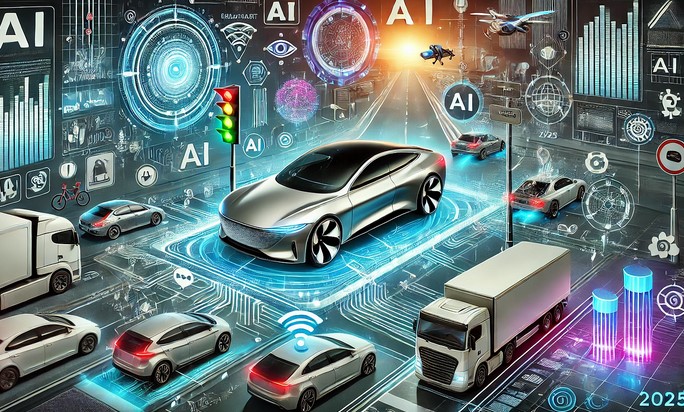
Source:https://miro.medium.com
Picture this: You are cruising down a rain-slicked highway at twilight. Suddenly, a car two vehicles ahead slams on its brakes. Before your human reflexes can even register the brake lights, your car smoothly decelerates, nudging you slightly away from the slickest part of the lane.
This isn’t science fiction anymore. Over my decade-long career in automotive engineering and tech journalism, I have watched cars evolve from mechanical beasts of burden into rolling supercomputers. The driving force behind this massive evolution? Artificial Intelligence.
If you have ever wondered exactly how AI is changing the auto industry, you are in the right place. Let’s peel back the hood and look at how code and algorithms are redefining our relationship with the steering wheel.
The Brains Behind the Wheel: Autonomous Driving and Advanced Driver Assistance
When people think about AI in cars, they usually picture a fully autonomous vehicle cruising without a driver. While true Level 5 autonomy is still a work in progress, AI is already acting as your invisible co-pilot through Advanced Driver Assistance Systems (ADAS).
From Reactive to Predictive Technology
Traditional safety features were reactive; ABS brakes only kicked in after a skid began. Today’s AI-driven systems are predictive. They utilize computer vision, LiDAR, and radar sensors to constantly scan the environment, predicting human behavior before it happens.
To understand how this works, think of the AI as a hyper-vigilant quarterback. It doesn’t just watch the ball; it reads the entire field, tracking the trajectory of pedestrians, cyclists, and other vehicles simultaneously.
Machine Learning on the Open Road
Every mile driven by an AI-equipped vehicle feeds data back into a neural network. This process, known as machine learning, allows the system to recognize complex patterns.
-
Edge Case Detection: Identifying rare scenarios, like a rogue mattress falling off a truck.
-
Weather Adaptation: Adjusting braking distances automatically during heavy downpours or icy conditions.
-
Path Planning: Calculating the safest and most efficient line through a chaotic intersection.
Under the Hood: Smart Manufacturing and Predictive Maintenance
The impact of artificial intelligence extends far beyond the consumer driving experience. It has fundamentally reshaped how cars are built and maintained long after they leave the dealership floor.
The AI-Powered Assembly Line
Walk into a modern automotive plant today, and you will notice a stark difference from a decade ago. Generative AI is now used to design lightweight structural components, optimizing strength while minimizing material waste. On the factory floor, collaborative robots (cobots) use computer vision to detect microscopic defects in paint or welds that the human eye would easily miss.
Predictive Maintenance: No More Guesswork
We have all experienced the dread of the “Check Engine” light. Usually, it turns on after a component has already failed. AI changes this headache completely through predictive maintenance.
Imagine your car as a patient wearing a 24/7 heart monitor. By analyzing real-time telemetry data—such as minor voltage fluctuations, vibration frequencies, and temperature spikes—the onboard AI can predict precisely when a fuel pump or alternator is nearing the end of its lifespan. It can then alert you to visit a service center before you end up stranded on the side of the highway.
Pro Tip: When buying a modern vehicle, look closely at the manufacturer’s over-the-air (OTA) software update track record. A car with robust OTA capabilities means your vehicle’s AI algorithms can improve and receive safety updates while sitting right in your garage.
Inside the Cabin: The Rise of Connected and Personalized Infotainment
The modern cockpit has transformed into a personalized digital sanctuary, shifting away from confusing arrays of plastic buttons toward intuitive, AI-driven user interfaces.
Natural Language Processing (NLP)
Early voice command systems were incredibly frustrating, requiring you to memorize rigid, robotic phrases. Thanks to advanced Natural Language Processing, you can now speak to your car just like you would to a friend. Saying “I’m chilly” prompts the AI to raise the climate control by a few degrees, while “Find me a good espresso nearby” filters local navigation results based on your historical preferences.
Deep Personalization
AI algorithms actively learn your daily routines and habits to make your drive seamless:
-
Contextual Routing: Automatically suggesting the fastest route to your office at 8:00 AM based on live traffic data.
-
Driver Monitoring: Using cabin cameras to track eye movement and facial expressions, detecting signs of drowsiness or distraction, and prompting you to take a coffee break.
-
Media Curation: Syncing with your favorite streaming platforms to suggest playlists or podcasts tailored specifically to the duration of your commute.
Smart Cities and the Intelligent Fleet Future
Looking ahead, the true potential of AI will be unlocked when individual vehicles stop acting as isolated islands and begin communicating with the world around them. This ecosystem relies heavily on Vehicle-to-Everything (V2X) communication.
Eradicating the Traffic Jam
When cars can talk to traffic lights, infrastructure, and each other via AI-driven networks, traffic flow becomes optimized. Imagine a city where traffic lights dynamically adjust their timing based on real-time vehicle demand, virtually eliminating unnecessary idling at empty intersections.
Fleet Optimization and Electrification
For commercial logistics and electric vehicles (EVs), AI acts as the ultimate efficiency expert. Algorithms manage large fleets by calculating optimal delivery routes, predicting battery degradation, and scheduling charging stops during off-peak grid hours to save costs and reduce carbon footprints.
The Challenges Ahead
While the innovations are incredibly exciting, my time in the industry has taught me that we must look at these advancements with a critical eye. The rapid integration of AI brings serious challenges that engineers and regulators are still scrambling to solve.
-
Cybersecurity Risks: As vehicles become more reliant on cloud networks and code, they become potential targets for hackers. Protecting the vehicle’s control systems from external breaches is an absolute priority.
-
The “Black Box” Problem: Deep learning neural networks are highly complex. Sometimes, it is difficult for engineers to decipher exactly why an AI made a specific decision in a split-second emergency scenario.
-
Data Privacy: Your car collects an immense amount of personal data, including your location history, driving habits, and even biometric information. Clear regulations are vital to ensure this data isn’t misused.
The Road Ahead
Artificial intelligence is no longer just a luxury add-on for high-end electric vehicles; it is rapidly becoming the foundational architecture of the entire transportation sector. From making our commutes safer and reducing mechanical breakdowns to creating an entirely personalized experience inside the cabin, AI is fundamentally changing the auto industry for the better. We are moving away from an era where we simply drive cars, and moving into an era where we truly partner with them.
What AI feature are you most excited to see in your next vehicle? Would you feel comfortable letting a fully autonomous algorithm take the wheel on your morning commute? Let’s get a conversation started in the comments below!