EV Battery Replacement Cost: What to Expect in 2025
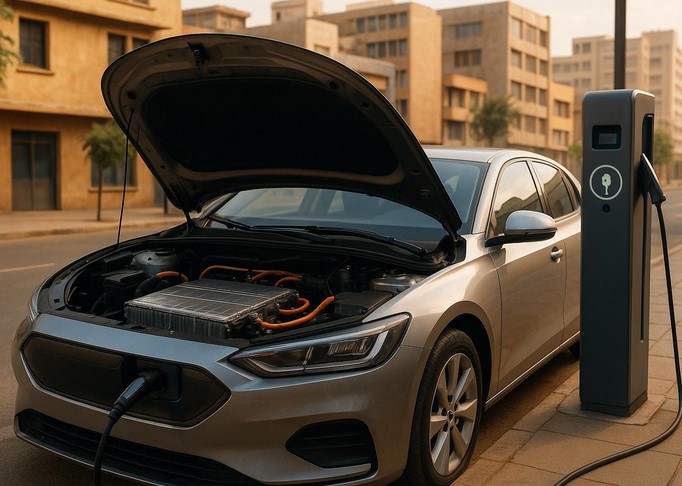
Source:https://www.ev24.africa
A few months ago, an old client rolled into my garage driving an early-generation electric hatchback with a dashboard flashing a dreaded battery degradation warning. His driving range had plummeted from 80 miles down to a meager 35, making his daily commute a game of logistical Russian roulette. When I pulled up the official dealership invoice for a fresh pack, his jaw hit the floor: the estimate was nearly equal to the current resale value of the entire car.
It is the single biggest question mark hanging over the electric vehicle revolution, and a primary source of anxiety for used car buyers. We all know that our smartphones struggle to hold a charge after a few years of constant use. But what happens when that smartphone is a 4,000-pound machine parked in your garage?
If you are trying to separate internet myths from actual workshop reality, you are in the right place. Let’s unbolt the high-voltage safety covers and take an honest, data-driven look at the actual EV battery replacement cost landscape as we move through 2025.
Decoding the Invoice: Why Are EV Batteries So Expensive?
To understand the raw numbers on a repair bill, you have to understand exactly what you are paying for. You aren’t just buying a massive version of a standard AA battery; you are purchasing a highly complex, chemically active structural component of the car’s chassis.
The Cost per Kilowatt-Hour Metric
In the automotive industry, we measure battery capacity in kilowatt-hours (kWh). Think of a kilowatt-hour exactly like the physical size of a gas tank. A larger gas tank holds more fuel, allowing you to drive further, but it costs more to fill up and replace.
The industry standard benchmark for measuring battery manufacturing costs is the cost per kWh at the pack level. Over the last decade, this figure has plummeted dramatically. In the early 2010s, manufacturers were paying over $600 per kWh. By 2025, scaling production and new chemical formulas have pushed average manufacturing costs down closer to the $100 to $130 per kWh range.
Material Economics and Chemistry
The cost of an EV battery is heavily tied to what is happening inside its individual cells. Most electric vehicles on the road today rely on one of two major lithium-ion chemistries:
-
NMC (Nickel Manganese Cobalt): Offers exceptional energy density and long range, but relies on expensive, volatile raw materials that drive up replacement costs.
-
LFP (Lithium Iron Phosphate): Becoming massively popular in 2025 for standard-range vehicles. LFP packs skip the expensive cobalt and nickel entirely, resulting in a battery that is significantly cheaper to manufacture, structurally safer, and highly resistant to degradation.
The Real Numbers: What Does an EV Battery Replacement Cost in 2025?
Let’s cut straight to the chase. If your electric vehicle is completely out of its factory warranty and needs a wholesale battery pack swap today, what will it actually cost you?
For a standard entry-level or commuter EV with a modest 40 kWh to 60 kWh battery pack, a full out-of-pocket replacement generally ranges between $5,000 and $9,000.
If you step up into the premium tier—long-range SUVs, performance sedans, or luxury trucks sporting massive 80 kWh to 100+ kWh packs—the bill escalates quickly. For these high-capacity platforms, expect a replacement cost anywhere from $12,000 to $20,000+, depending heavily on the specific brand architecture and dealership labor rates.
The Breakdown: Hardware vs. Specialized Labor
The total price tag isn’t just the physical battery pack. It also includes:
-
The Battery Pack Assembly: The core hardware module, which accounts for roughly 70% to 80% of the total bill.
-
Peripheral Components: Replacement high-voltage wiring seals, fresh cooling lines, and specialized internal fuses.
-
High-Voltage Diagnostic Labor: Dropping an EV battery is not like changing an alternator. Technicians must wear specialized insulated safety gear, utilize heavy-duty hydraulic lifting tables, and undergo rigorous training to safely manage 400-volt to 800-volt architectures. This specialized labor typically runs anywhere from $1,000 to $3,000 of the total invoice.
The Ultimate Safety Net: The Factory EV Warranty
Before you let these numbers give you sleepless nights, I need to share an industry insight that mainstream headlines often gloss over: almost nobody pays for a replacement out of pocket.
The 8-Year / 100,000-Mile Standard
By law in major automotive markets like the United States, manufacturers are legally mandated to cover electric vehicle battery packs and high-voltage powertrains for a minimum of 8 years or 100,000 miles (whichever comes first). In places like California, certain zero-emission mandates push that coverage out even further to 10 years or 150,000 miles.
Understanding the Degradation Threshold
A warranty claim doesn’t require a catastrophic electrical fire or a completely dead vehicle. EV warranties explicitly protect against natural capacity degradation.
Most manufacturer warranties state that if the battery’s maximum state-of-health (SoH) drops below 70% of its original capacity during the warranty window, the manufacturer is financially responsible for restoring or replacing the pack completely free of charge.
Pro Tips: How to Maximize Battery Lifespan and Avoid the Bill
In my time managing fleet vehicles and private builds, I’ve learned that a battery’s lifespan is almost entirely dictated by how it is treated by the driver. You can actively prevent premature degradation by avoiding a few common operational stressors.
-
Tame the DC Fast Charging Habit: DC fast chargers are incredibly convenient for long road trips, but they slam a massive amount of electrical current and thermal energy into the cells simultaneously. Think of fast charging like forcing water into a balloon using a high-pressure fire hose. Frequent use accelerates cell degradation; stick to Level 2 home charging for your daily routines.
-
Manage the State of Charge (SoC) Buffers: Lithium-ion cells experience the highest amount of chemical stress when they are sitting at 100% fully charged or drained down to absolute 0%. Set your vehicle’s onboard charging software limit to 80% or 90% for daily commuting, only topping it off to 100% right before you head out on a long trip.
-
Mind the Extreme Temperatures: Extreme heat is the ultimate silent killer of battery health. If you live in an incredibly hot climate, try to park in the shade or a garage whenever possible, and keep the car plugged into a charger so the onboard thermal management system can use grid power to actively cool the cells.
Summary of 2025 EV Battery Dynamics
| Vehicle Segment | Average Pack Size (kWh) | Typical Chemistry | Estimated Out-of-Warranty Cost |
| Commuter / City EV | 40 – 60 kWh | LFP or Standard NMC | $5,000 – $9,000 |
| Long-Range Sedan / SUV | 75 – 85 kWh | High-Density NMC | $10,000 – $15,000 |
| Premium Luxury / Truck | 100+ kWh | Premium NMC | $16,000 – $22,000+ |
The Road Forward: Modular Repairs and Second-Life Markets
As the automotive sector matures through 2025, we are witnessing a massive shift in how workshops handle battery health. The era of throwing away an entire multi-thousand dollar pack just because a few internal elements are failing is rapidly coming to a close.
Modern EV architectures are increasingly modular. Instead of a single, solid block of cells, the battery pack is broken down into individual sub-modules. In the coming years, independent diagnostic shops will routinely drop a compromised pack, identify the single faulty cell module using advanced software diagnostics, and replace just that specific module for a fraction of the price of a wholesale replacement.
Furthermore, a thriving secondary market is emerging. Spent EV batteries that are no longer fit for the rigorous demands of driving still hold roughly 70% to 80% of their original capacity. These “second-life” packs are being bought up rapidly for residential solar grid storage, giving them high residual value that undercuts the ultimate net cost of a disposal or trade-in.
Are you currently shopping for a used EV, or are you trying to calculate the long-term running costs of your current daily driver? Does the safety net of an 8-year factory warranty give you peace of mind, or do the raw replacement figures still make you hesitant to make the jump? Let me know your thoughts and questions in the comments below!