How to Install a New Alternator: DIY Step-by-Step Guide
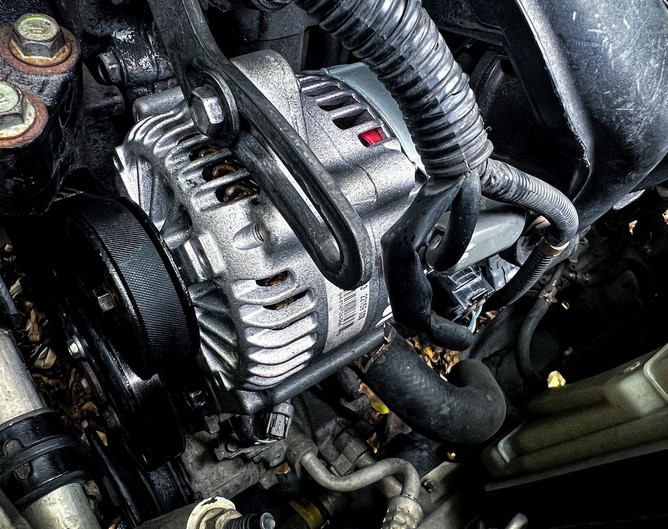
Source:https://cdn.jdpower.com
It’s 10:00 PM on a Tuesday, and you’re idling at a stoplight when you notice your headlights getting suspiciously dim. Suddenly, your dashboard lights up like a Christmas tree, the radio cuts out, and the steering feels heavy. You’ve just experienced the classic “alternator death rattle.”
In my twelve years of getting my knuckles bloody under hoods, I’ve seen this scenario play out a thousand times. Most people think their battery has died and rush to buy a new one, only to find themselves stranded again two days later. The truth is, the battery is just the “bucket”—the alternator is the “faucet” that keeps it full. If the faucet is broken, the bucket will always run dry.
Learning how to install a new alternator is a rite of passage for any DIYer. It’s a job that looks intimidating because of the belts and wires, but once you understand the rhythm of it, you can save yourself $300 to $500 in labor costs. Let’s get your hands dirty.
The Heart of the Charging System: What Does an Alternator Do?
Before we pick up a wrench, we need to understand what we are replacing.
The Marathon Runner Analogy
Think of your car like a marathon runner. The battery is like a small energy bar the runner eats before the race; it provides the initial burst to get the engine (the runner) started. Once the runner is moving, however, they can’t survive on that one bar.
The alternator is like the runner’s lungs and digestive system working in real-time. As the engine spins, it turns the alternator, which converts that mechanical energy back into electricity to power your lights, wipers, and AC, while simultaneously “recharging” the battery for the next start.
Pre-Flight Check: Tools and Preparation
I’ve learned the hard way that the quickest way to turn a 1-hour job into a 4-hour disaster is to start without the right tools. For a standard alternator replacement, you will need:
-
Socket Set (Metric and Standard): Most modern cars use 10mm, 12mm, or 14mm bolts.
-
Serpentine Belt Tool or Breaker Bar: To release the tension on the drive belt.
-
Wrenches: For tight spaces where a socket won’t fit.
-
Voltmeter (Multimeter): To verify the new unit is working after installation.
-
Safety Gear: Gloves and eye protection (batteries can be temperamental).
LSI Keywords to Know:
-
Serpentine Belt: The long rubber belt that drives the alternator.
-
Tensioner: The spring-loaded pulley that keeps the belt tight.
-
Voltage Regulator: The internal component of the alternator that manages power output.
-
B+ Terminal: The main heavy-gauge wire that carries power to the battery.
Step-by-Step Guide: How to Install a New Alternator
Step 1: The Golden Rule – Disconnect the Battery
I cannot stress this enough: Disconnect the negative battery cable first. If you skip this and your wrench touches the metal frame while you’re unscrewing the alternator’s “hot” wire, you will create a massive spark that can fry your car’s expensive ECU or even cause the battery to explode.
Step 2: Clear the Path
On some cars, the alternator is right on top. On others, you might need to remove the air intake box or move the coolant overflow tank. Take a photo of the engine bay before you start moving things—it’s your “map” for later.
Step 3: Release the Serpentine Belt
Locate the belt tensioner. Using your breaker bar, rotate the tensioner to take the slack out of the belt. Gently slip the belt off the alternator pulley.
-
Expert Insight: You don’t usually need to remove the entire belt from the engine. Just move it off the alternator and let it hang. This saves you the headache of re-routing the whole “snake” later.
Step 4: Disconnect the Wiring
You will usually find two connections:
-
The Harness Plug: A plastic clip that snaps into the back.
-
The B+ Power Wire: This is usually held on by a nut under a rubber boot. Remove the nut and pull the wire aside.
Step 5: Unbolt and Remove
Most alternators are held in place by two or three long bolts. These can be stubborn due to years of heat cycles. If they don’t budge, give them a squirt of penetrating oil (like PB Blaster) and wait ten minutes. Once the bolts are out, you might need a pry bar to gently wiggle the old unit out of its bracket.
Step 6: The “Side-by-Side” Comparison
Before installing the new unit, hold it up next to the old one. Ensure the pulley width is the same and the bolt holes align perfectly. Many auto parts stores carry “close enough” parts that won’t actually fit your specific trim level.
Step 7: Installation is the Reverse of Removal
-
Slide the new alternator into the bracket.
-
Hand-tighten the mounting bolts first to ensure they aren’t cross-threaded.
-
Torque the bolts to factory specs (usually found in your owner’s manual).
-
Reconnect the wiring (B+ wire first, then the plastic harness).
-
Re-install the serpentine belt. Ensure the belt is perfectly seated in the “grooves” of every pulley.
Expert Advice: The “Hidden Warning” of New Alternators
Tips Pro: The Battery Trap.
If your alternator was dead for a while, your battery is likely completely drained. Do not use your new alternator to charge a stone-dead battery. An alternator is designed to maintain a charge, not to act as a heavy-duty battery charger. Trying to “jump-start” a car with a dead battery and a brand-new alternator puts immense strain on the new unit’s internal diodes, which can cause it to fail prematurely. Charge your battery with a wall charger before your first test drive.
Final Verification: Testing Your Work
Once everything is back together and the battery is reconnected, it’s time for the moment of truth. Start the engine.
-
Listen: Listen for any squealing (the belt is loose) or grinding (the alternator is defective).
-
The Voltmeter Test: Set your multimeter to DC Volts. Touch the leads to your battery terminals while the engine is running.
-
Healthy Reading: $13.8V$ to $14.4V$.
-
Failing Reading: Anything below $13.2V$ means the new unit isn’t putting out enough juice.
-
Conclusion: Empower Your Garage
Knowing how to install a new alternator isn’t just about the money you save—it’s about the confidence you gain. There is a specific kind of satisfaction that comes from hearing your engine roar to life, knowing that the electrical “heart” of your machine is healthy because of your own two hands.
Take your time, mind your battery cables, and always double-check your belt alignment. Your car (and your wallet) will thank you.
Did you run into any stubborn bolts or a belt that refused to go back on? Share your DIY struggles or victories in the comments below!