Top-Rated Aftermarket Exhausts: Performance and Sound Enhancements
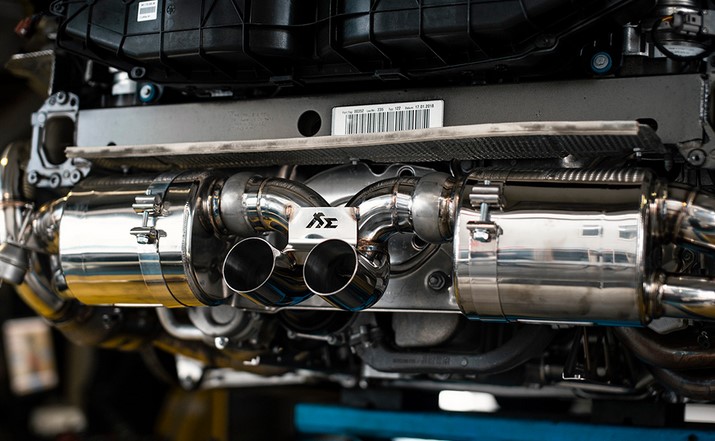
Source:https://eaperformance.com.au
You’re idling at a red light, and a car pulls up next to you. It looks similar to yours, but as the light turns green, it emits a deep, visceral growl that you can feel in your chest. It pulls away with a crispness that makes your own car feel like it’s trying to run a marathon through a straw.
In my twelve years of tuning and testing, I’ve found that the factory exhaust is often the “choke point” of a vehicle. Manufacturers build stock systems to be as quiet and cheap as possible, often sacrificing horsepower on the altar of suburban silence. Upgrading to a top-rated aftermarket exhaust isn’t just about making noise; it’s about letting your engine breathe, shedding weight, and finally hearing the “voice” your car was born with.
The Physics of Flow: Why Stock Exhausts Hold You Back
To understand the value of an upgrade, you have to understand Back Pressure.
The Soda Straw Analogy
Imagine trying to run a mile while breathing through a tiny cocktail straw. Your lungs (the engine) are capable of moving plenty of air, but the straw (the stock exhaust) limits how fast you can get the “waste” out. This creates a backup of pressure that forces your engine to work harder just to push out old gases.
An aftermarket system replaces that “cocktail straw” with a high-flow “smoothie straw.” By reducing back pressure, your engine can cycle air and fuel more efficiently, leading to:
-
Horsepower Gains: Usually 5–20 HP for most street cars.
-
Throttle Response: That “laggy” feeling when you hit the gas disappears.
-
Fuel Efficiency: An engine that doesn’t have to fight itself often sees a slight bump in MPG.
Choosing Your Level: Axle-Back vs. Cat-Back vs. Turbo-Back
Before you buy, you need to decide how deep you want to go. In the industry, we categorize systems by how much of the original “plumbing” they replace.
1. Axle-Back: The “Acoustic” Upgrade
This replaces everything from the rear axle to the exhaust tips (mostly just the muffler).
-
Best for: Beginners who want a better sound without spending $2,000.
-
Gain: Minimal performance, but a massive improvement in the exhaust note.
2. Cat-Back: The “Sweet Spot”
This replaces everything from the Catalytic Converter back to the tips.
-
Best for: Intermediate enthusiasts. It includes larger-diameter mid-pipes that significantly improve airflow.
-
Gain: This is where you start to feel the 5–15 HP gains and get that deep, resonant tone.
3. Turbo-Back / Header-Back: The “Track Star”
This replaces the entire system, including the downpipe or headers.
-
Best for: Serious builds. This usually requires an ECU Tune to prevent “Check Engine” lights.
-
Gain: Massive—up to 40+ HP on turbocharged cars like the Subaru WRX or Golf GTI.
2026 Power Players: Top-Rated Exhaust Brands
After a decade of listening to thousands of setups, these are the brands that consistently deliver the best quality-to-sound ratio in 2026.
Akrapovič: The Titanium Surgeon
If you have a high-end European car or a liter-class sportbike, Akrapovič is the “Holy Grail.”
-
The Insight: They use proprietary titanium alloys that are incredibly light. I’ve seen Akrapovič systems shave 20 lbs off a car’s weight.
-
The Sound: Precise, “high-frequency,” and exotic. It sounds like a race car, not a lawnmower.
Borla: The American Growl
Borla is famous for their “No Drone” technology. In my early days, I hated aftermarket exhausts because they would “drone” (a constant, annoying hum) on the highway. Borla uses Polyphonic Harmonizers to ensure the car is quiet at cruise but screams at Wide Open Throttle.
-
Options: They offer “Touring” (mild), “S-Type” (medium), and “ATAK” (aggressive).
MagnaFlow: The Deep Bass
MagnaFlow is the go-to for that classic, deep American V8 rumble. Their systems are typically made from high-grade stainless steel and offer a smooth, “straight-through” perforated core that maximizes flow.
Expert Advice: The “Drone” and the “Law”
Tips Pro: The Cold Start Reality Check.
Before you buy the loudest “Track Edition” exhaust, remember the Cold Start. When you first turn on your car in the morning, the idle is high and the exhaust is at its loudest. If you have neighbors or a sleeping baby, a “Muffler Delete” or an ultra-loud system might make you the most hated person on the block. Look for systems with Active Valves that allow you to quiet the car with a button for neighborhood driving.
LSI Keywords: Mandrel-bent tubing, Stainless steel T304, Resonator delete, Back pressure, Muffler bypass.
Scannable Comparison: Which System is Right for You?
| System Type | Cost (Est.) | HP Gain | Install Difficulty | Sound Level |
| Axle-Back | $400 – $800 | 1 – 3 HP | Easy (DIY) | Moderate |
| Cat-Back | $800 – $1,800 | 5 – 15 HP | Moderate | Deep / Aggressive |
| Turbo-Back | $1,500 – $3,000+ | 20 – 40 HP | Hard (Shop) | Very Loud |
Conclusion: Find Your Signature Sound
Upgrading your exhaust is the most “interactive” modification you can make. Every time you downshift under a bridge or accelerate onto a highway, you’re reminded why you love driving. The top-rated aftermarket exhausts of 2026 offer a perfect blend of modern engineering (like 3D-scanned fitment) and old-school mechanical soul.
Don’t settle for the “straw” the factory gave you. Give your engine the ability to scream, and it will reward you with performance you can actually feel.
Are you looking for a refined “European” purr or a neighbor-waking “American” rumble for your next build? Let’s talk about your dream setup in the comments!